Synapse
A structured ideation workspace for the blank page, before a project has any direction.
A tool that structures your thinking instead of replacing it.
Overview
Synapse is an ideation workspace for the moment before a project has direction. I researched, designed, and built it end to end as my senior thesis, from a literature review through a working prototype.
It started as Jumpstart, a rougher take on the same problem. The rename came with the focus. Like a synapse, the tool exists to connect thoughts, moving you from scattered fragments to something you can use.
The problem
The blank page stops people. Not for lack of talent, but for lack of structure. There is no bridge between wanting to make something and knowing where to start.
The tools built for this moment fail in three different directions.
- Production software like Figma, Illustrator, and Procreate is built for execution. It assumes you already know what you are making.
- Inspiration platforms like Pinterest hand you reference material with no path from inspiration to an actual idea.
- Generative AI skips the thinking and returns a finished idea, at the cost of ownership at the exact stage where ownership matters most.
What would a tool look like if it structured your own thinking instead of replacing it?
Process
I grounded the project in creative-cognition research rather than assumption. Four findings shaped everything that followed.
- Ideation is quantity over quality. The Nielsen Norman Group frames it as a phase for generating broadly without evaluating yet. More ideas, better odds one is worth keeping.
- Osborn's principles still hold. Alex Osborn's 1953 Applied Imagination set out four rules: generate quantity, withhold judgment, welcome unusual ideas, build on others. They underpin nearly every modern framework, and they became the backbone of every method in Synapse.
- Judgment during generation kills output. Evaluating ideas while producing them narrows what you make. Even self-directed judgment introduces enough fear of failure to shrink the work.
- AI creates real tension around ownership. Research suggests the struggle of generating an idea yourself is part of what makes the finished work feel like yours.
That last finding set the one rule the whole product runs on. Synapse never generates ideas for you. Every feature expands, connects, or organises your own input.
A calm, quiet interface
Muted tones, clean typography, and a layout that feels like a clean desk. Every decision served cognitive clarity. The tool should recede so the ideas come forward.
Five methods
I looked at established ideation and design-thinking frameworks and worked out which ones survive being made digital. Five did.
- Mind Map. The most widely used method in practice. Branches out from a central concept, with auto-layout handling position so you think about ideas instead of spacing.
- Fishbone. Adapted from the Ishikawa diagram. Define a central issue, then fill branching categories with contributing factors for root-cause thinking.
- Lotus. A central idea ringed by eight sub-ideas in a 3×3 grid, each of which becomes the centre of its own grid. Up to 64 ideas from one starting point.
- SCAMPER. A seven-lens checklist worked in sequence: Substitute, Combine, Adapt, Modify, Put to other uses, Eliminate, Reverse. Best for iterating on something that already exists.
- Sailboat. Define the destination, then name the wind pushing you forward and the anchors holding you back.
Four of the five methods in the workspace.
Two modes
Different people need different kinds of support, and so does the same person on different days. Some want an open space. Others need a sequence of steps just to start. So I built both.
- Freeform. An open whiteboard. Drag in any method, mix them, rearrange at will. Built for early brainstorming and for people who already have a process.
- Guided. Pick your methods, set the session parameters, then move through timed prompts. The timer creates urgency that discourages overthinking, and every session ends with something usable.
Neither is the advanced one. The mode changes the experience, not the quality of thinking it supports. Most real sessions use both, opening wide early and narrowing as the work takes shape.
More than one discipline
The Resources section gives role-specific entry points instead of generic advice. Designers are pushed to start with emotional intent before opening production software. Writers are guided to separate generating from editing. Visual artists get pointed at the Lotus Diagram to branch out from a single word.
Final product
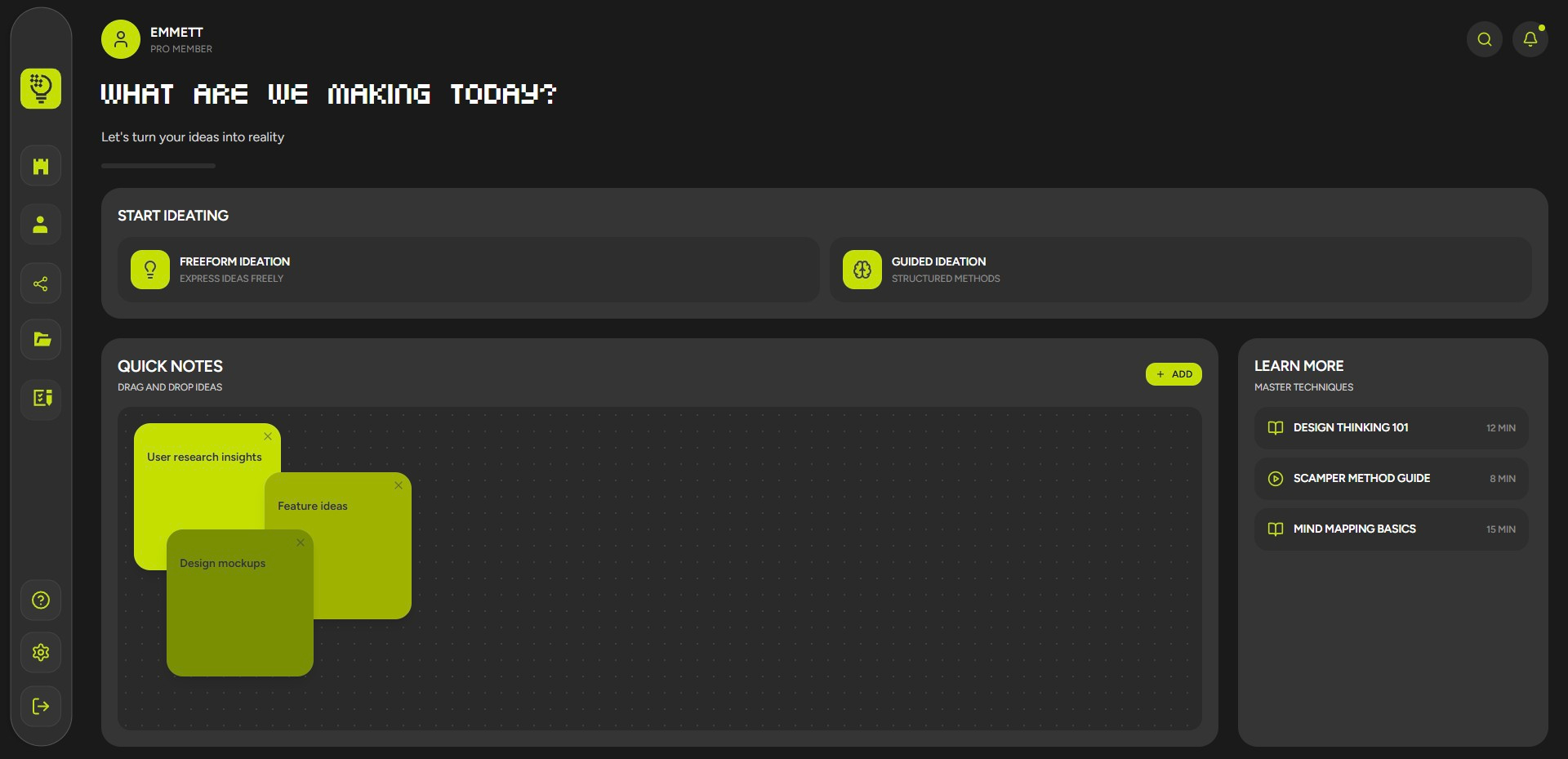
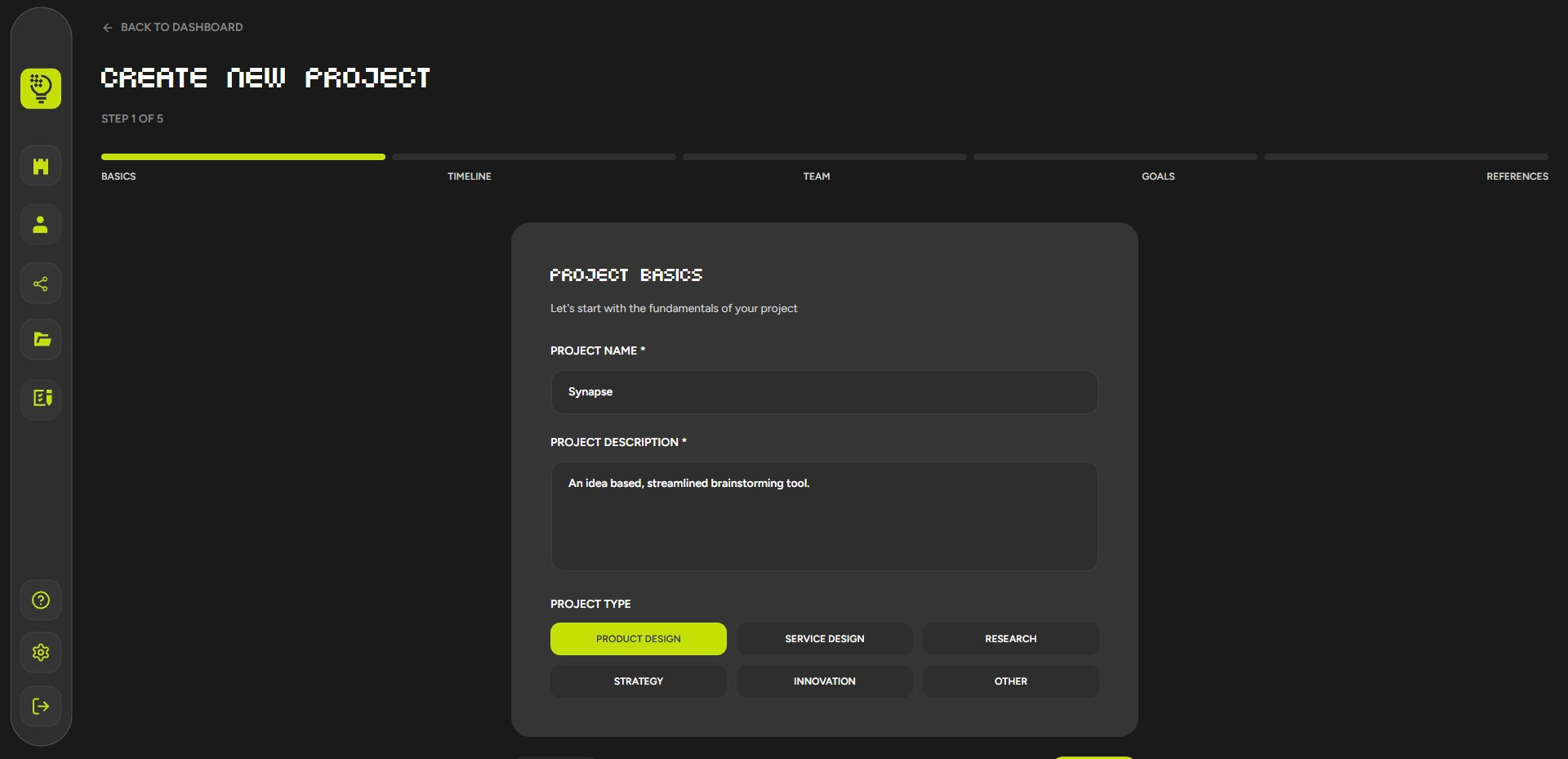
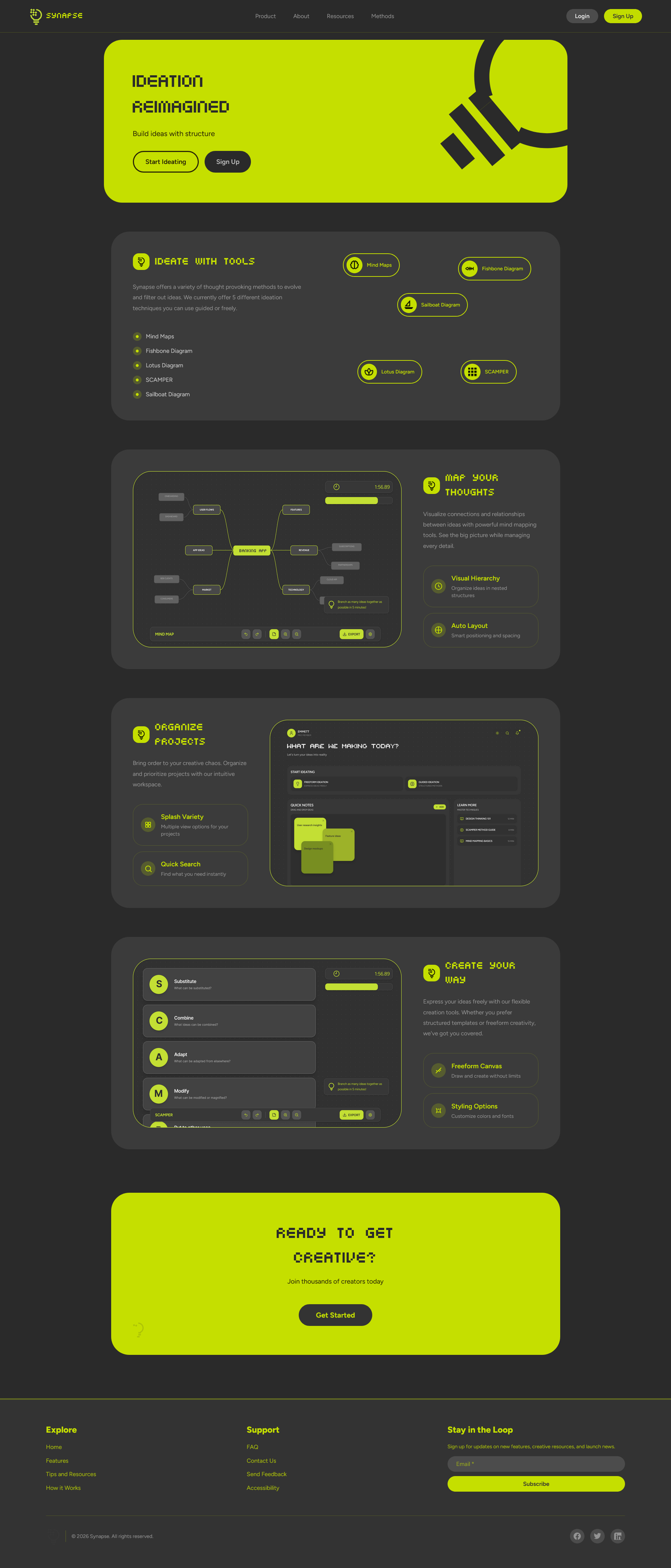
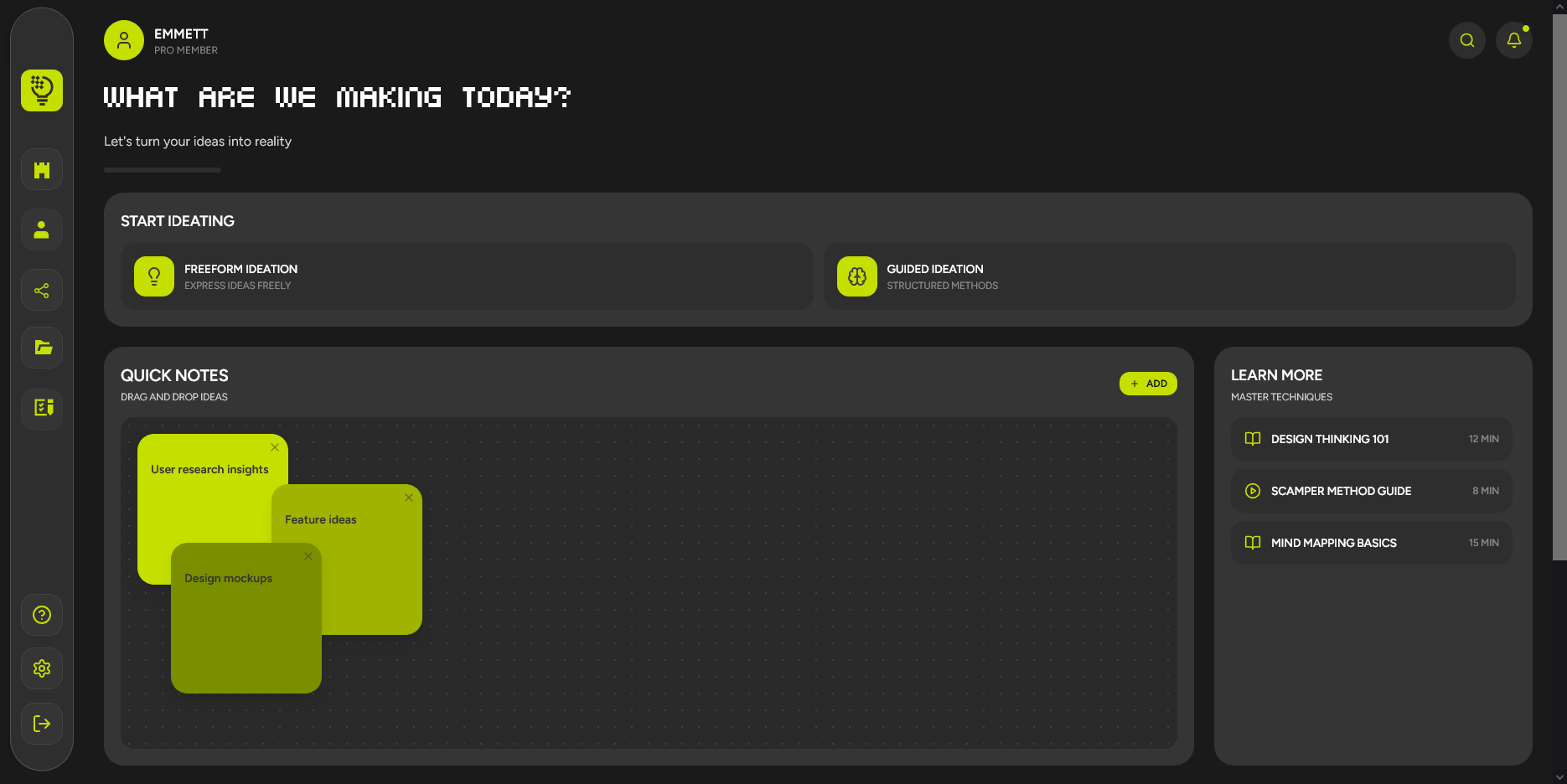
The first two frames are the product. The third is the thesis landing page, the site the project was presented on. Scroll inside each frame, or expand it to full size.
Challenges
- Structure versus freedom. Building two modes meant designing every method twice, once as a template on an open canvas and once as a timed flow. One mode would have been far faster, and would have served only one kind of thinker.
- Holding the line on AI. Every trend pointed at generative output, so refusing it meant not building the easiest thing to sell. The pull was strongest in Guided mode, where a stalled timer is a bad moment and a generated suggestion would have been trivial. I wrote prompts that reframe the question instead.
- Methods that resist structure. The Lotus Diagram was the hardest. Its value is recursive depth, and 64 cells reads as a spreadsheet unless the nesting is handled carefully.
- Working solo. Doing the literature review, research, design, and build alone meant every stage had to justify itself against the research. Slower early on, but the method choices held up.
Outcome
A working, testable prototype grounded in cited research: five ideation methods, two interaction modes, and a workspace for running multiple sessions.
The belief I ended up building the thesis around is that the blank page is not a failure of imagination. It is a structural problem, the absence of a framework to organise imagination through. Most tools support execution. Almost none support the moment before it.
What I'd explore next
- A larger method library. Six Thinking Hats, Crazy Eights, and design charrettes are the natural additions.
- Real-time collaboration. The Freeform canvas was architected for it from the start.
- A narrow role for AI. Not generation, but surfacing connections between ideas you already had, or asking a useful clarifying question.